USER RESEARCH • USER JOURNEY • PRODUCT DESIGN
The Chronic Care Ecosystem: Navigating the Path to Wellness.
In a landscape of fragmented health data, I architected a unified ecosystem that bridges the gap between patient struggle and clinical guidance. I didn’t just designed an app feature but a compass for chronic care.
Time
4 Months
Role
Product Designer
Collaborations
Co-Founders, Product Team, Telehealth Team (Doctors & Health Coaches), Developers
Context
Chronic conditions generally develop over time; however, most of the time, they can be inherited from parents. While chronic conditions are incurable, the good news is that many can be managed or even reversed by making simple lifestyle changes.
Problem
This is where Visit Health comes in, to support individuals with chronic conditions like diabetes and hypertension, Visit Health offers comprehensive lifestyle management programs.
Previously, the Health Coaches operated these programs independently, leading to -
Data loss when the coaches leave, or new coaches join
Inconsistency in health plans
Inadequate data to analyse progress
Insufficient progress data leads to high dropouts
In response to growing demand from corporates and insurers, an urgent need for an ecosystem that fosters collaboration between users and health coaches, enhancing lifestyle improvements and effective condition management.
To cater to the coach's struggle to track user progress effectively, making it easier to provide the support individuals need to manage their health and achieve lasting improvements.

User Research
To build a true ecosystem, I first had to understand the "manual" journey. I conducted a deep-dive immersion to identify where technology could amplify human coaching and where the human touch was irreplaceable.
Stakeholder Interviews: I collaborated with health coaches to map their existing workflows, identifying bottlenecks that tech could solve and manual steps that required protection.
Primary Immersion: I enrolled in the program myself as a "user" across various coaches and conditions. This firsthand experience allowed me to pinpoint irregularities and understand how health plans were being adapted in real-time.
User Feedback: I interviewed current and past participants to gauge the perceived value of the program and identify hidden pain points in their journey.
Key Insights
These conversations allowed me to visualise the current user journey from both coaches and patient's point of view. Following are the key insights-
Since many coaches run this program by themselves, the quality is compromised.
A new SOP (Standard Operating Procedure) is written for every new set of users for every chronic condition, leading to inconsistency.
20% of users drop the program midway because they are unable to track their improvement.
Coaches find it challenging to keep notes of multiple patients, resulting in untraceable data and making it difficult to track user progress.
Users face 20-minute calls with coaches, answering 20-30 lifestyle questions, which not everyone has time for.
These programs require understanding the user's diet and body, taking weeks to adjust their lifestyle accordingly.
Coaches have to place regular follow-up calls to check if the user is following the plan or has any concerns.
Design
With all the infromation the gathered by user search and team collaboration. I noted the problems I was designing to solve -
A new SOP (Standard Operating Procedure) is written for every new set of users
Since many doctors run this program by themselves, the quality is compromised.
20% of users drop the program midway because they are unable to track results.
Users struggle to track progress and adhere to health plans.
Coaches struggles to keep notes of multiple patients, making it difficult to track user data.
Coaches conduct 20-30 min calls to get user's lifestyle insights. Not everyone has much time.
Doctors struggle to conduct timely follow-up calls due to scheduling challenges.
Doctors struggle to conduct real-time improvements in user’s health.
Finally I designed following features to solve the above mentioned problems-

Health Coach App
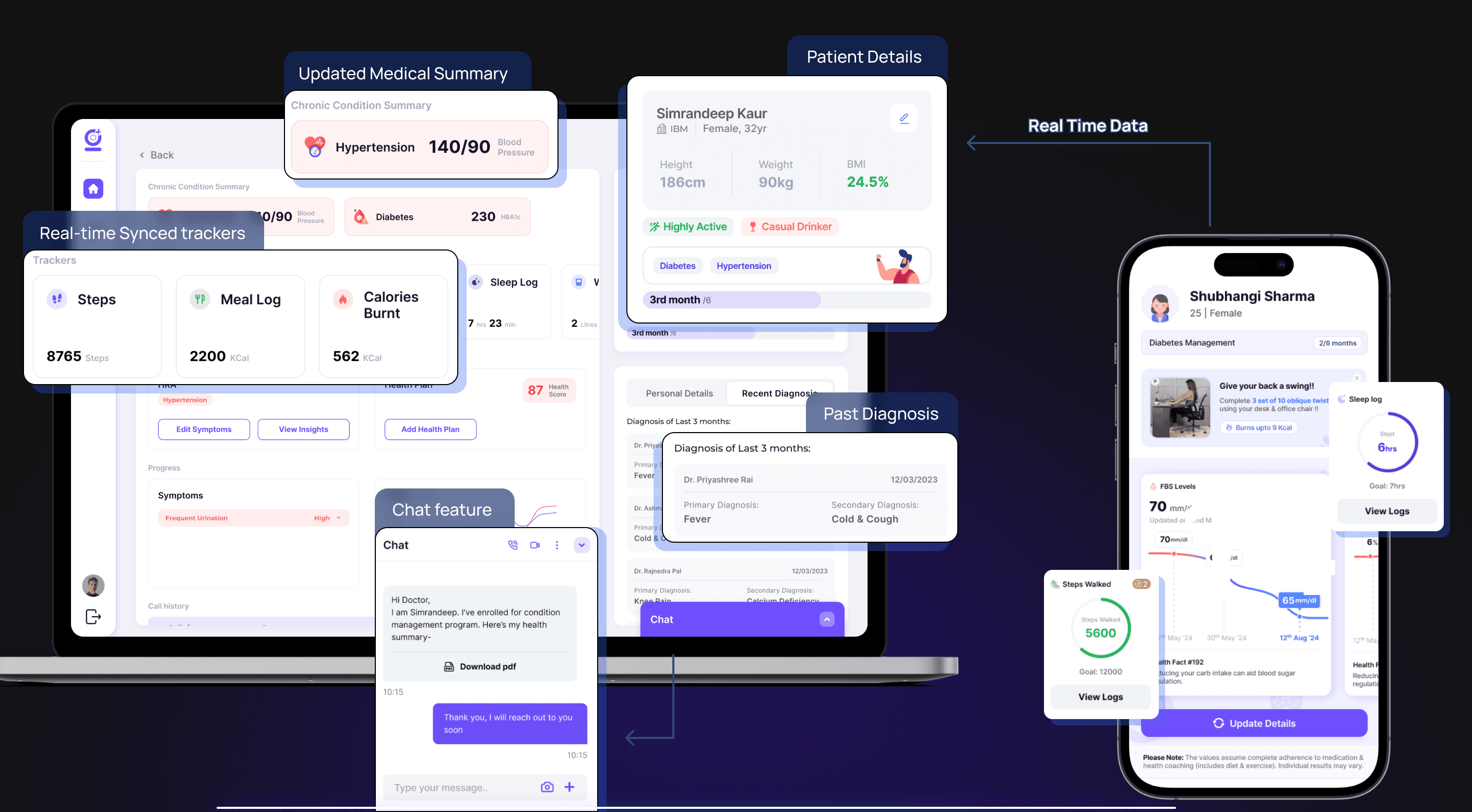
We developed a coach dashboard synced with user apps to track multiple patients, gather medical histories, and improve program quality.
Intuitive Short Onboarding
I joined health coaches to determine which questions were essential/optional/ subjective and put them into categories to streamline the user journey, so the users don’t need to spend 20 minutes on an initial call.


Smart Reports
For cases where tests are recommended, we also arranged consultations with specialists. To help users understand their reports better, we curated smart health reports that provide a comprehensive overview of their health.
AI Intervention
While coaches prepare personalized plans, users often feel disengaged. To keep them involved, we introduced an AI-generated health plan as a temporary solution.

Establishing Ecosystem
We synced the data from across different internal dashboards to this from the backend, without the need to ask users for updated documents every time something new comes up.
Standardised Operating Procedures
We recognized the need for tailored SOPs based on timelines - some clients prefer 6-month plans, while others choose 3 months, depending on their conditions.

The Outcomes
Increase in adherence
47%
Improved platform engagement
37%
Increase in health plan role out
16%
From behind the scenes
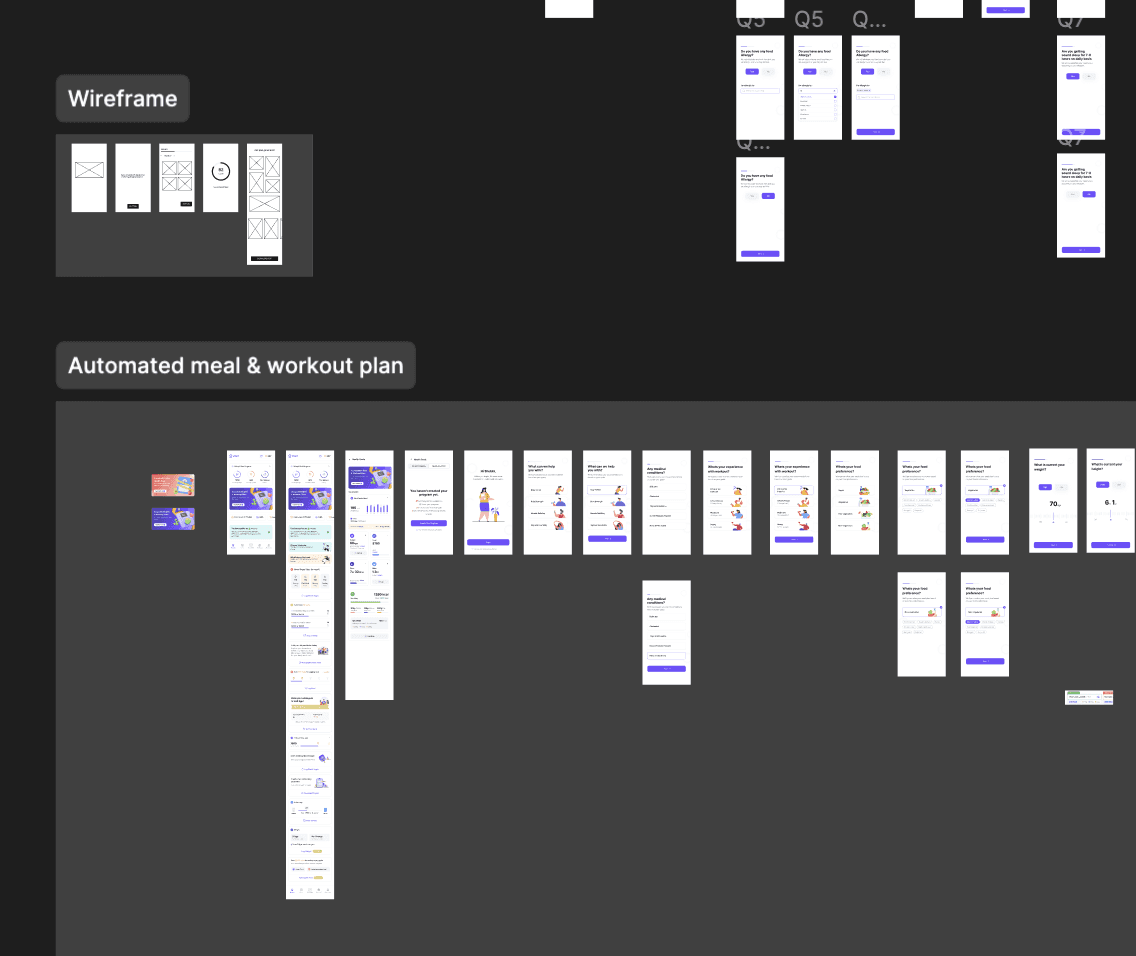
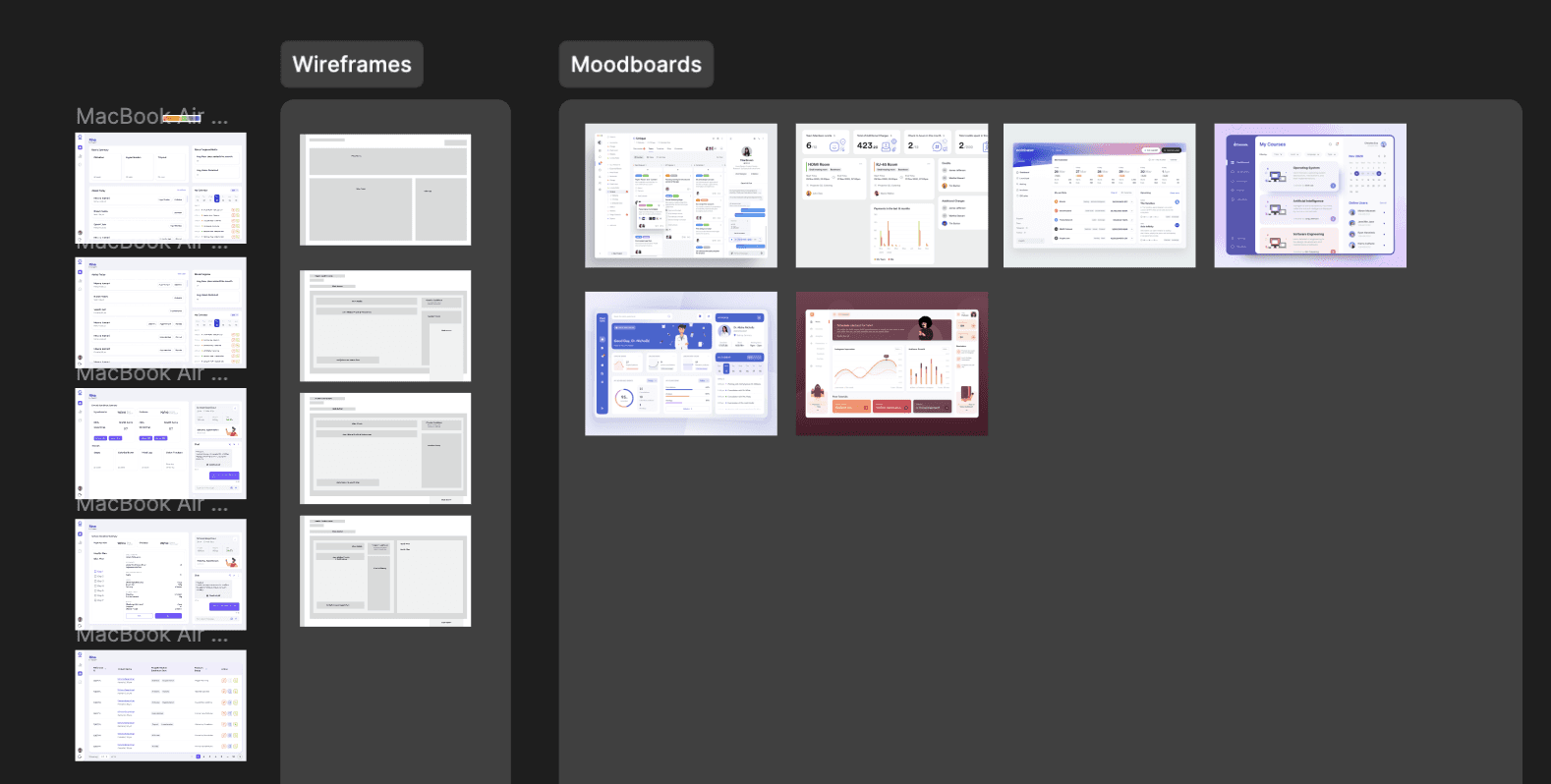
For this project, we had a lot of whiteboard meetings to define the user journey and goals. I used Figjam for affinity maps & User journeys. I drew initial wireframes on paper to discuss with the team. For designs and prototype, I used Figma. I performed competitor research and pasted it on the mood board for journey and elements reference. Here are a few snippets from the process.