Architecting an AI-Driven Career Agent
Collaboration
Competitive Benchmarking & Heuristic Audits
Conducted a rigorous audit of market players (Teal, Jobscan, Careerflow.io) to dissect data-ingestion pipelines and locate exact triggers for user skepticism and "AI fatigue."
Cross-Functional AI Architecture & Prompt Engineering:
Collaborated directly with the AI/ML and engineering teams to define the exact heuristics for the Match Score and the Resume Elevator. We established a weighted scoring model that prioritized seniority-level indicators (e.g., leadership scale, system architecture scope) over rigid keyword density, preventing senior resumes from being penalized by generic ATS logic.
Internal User Testing & Alumni Validation
Before rolling out the feature, I ran structured usability tests and live walkthroughs with internal alumni and beta users. This revealed a crucial psychological "aha" moment: when users saw a side-by-side "Before-and-After" comparison with a clear audit log explaining why a section was modified, their skepticism instantly dissolved into absolute trust.
Cross-Functional Scoping & Engineering Trade-Offs
Partnered directly with backend and AI engineers to understand algorithmic constraints, mapping out intentional skeleton loading states to manage background processing latency.
Ruthless Scoping (Saving Engineering Weeks)
Successfully advocated against building a heavy, complex inline text editor for the MVP. By proving that senior users preferred a clean review-and-download flow, I saved weeks of engineering overhead while protecting product focus.

Design Exploration
Designing for Explainable AI
Prototyped iterative interface concepts that surfaced why a resume was modified, transforming hidden algorithmic operations into visible, understandable data insights.
Figma Architecture & Prototyping
Built a scalable, component-driven design library in Figma featuring dynamic "Before-and-After" comparison modules, transparent match-score breakdowns, and zero-friction export states.

Design Solution
The final zero-to-one design architecture eliminated friction and built absolute user trust through targeted modules:
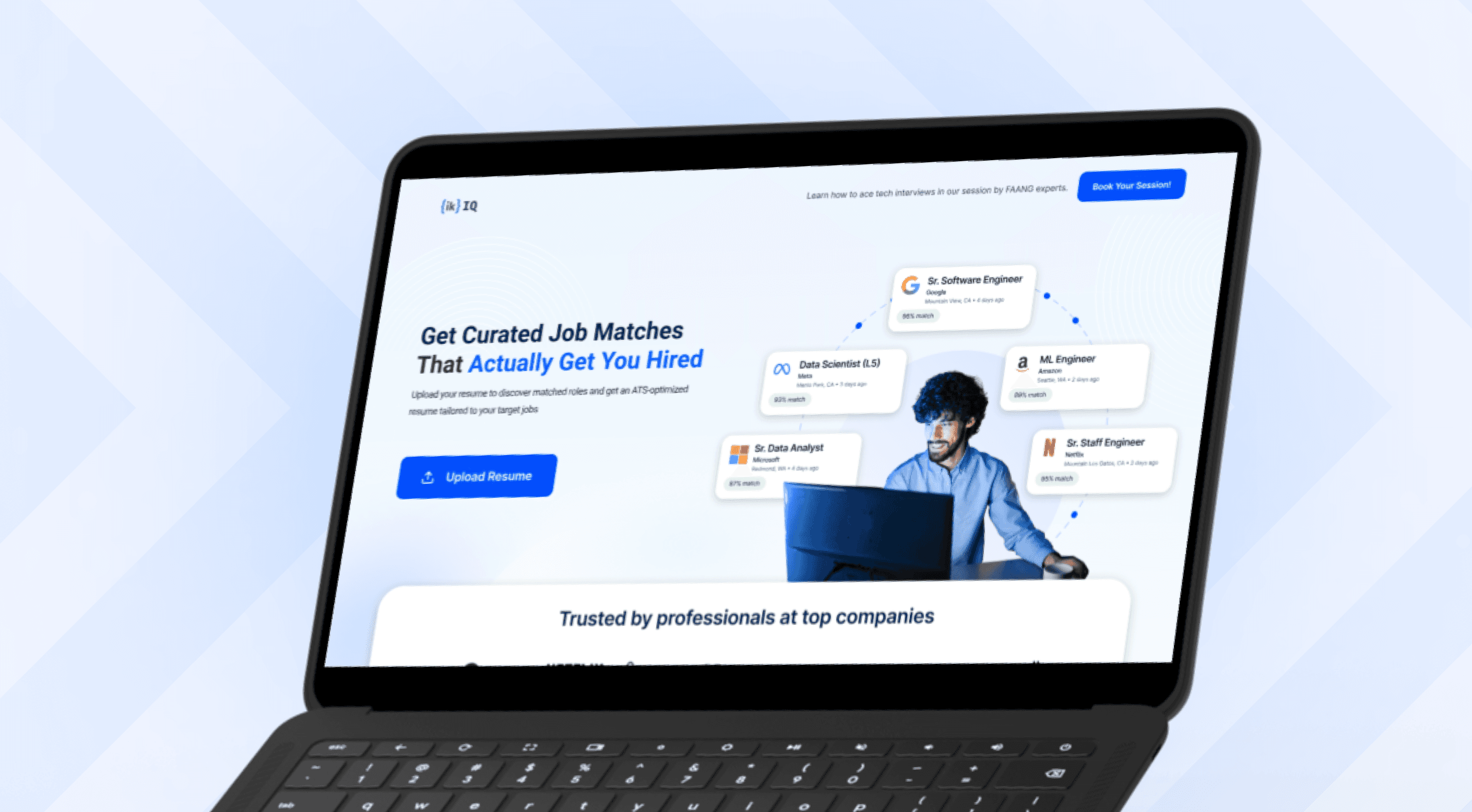
Unified Job Intelligence Engine
An aggregated command center pulling live openings from 45+ major portals into a single, filtered feed tailored to senior seniority levels.
Transparent Match-Score & Role Alignment
Displays explicit matching metrics and criteria gaps powered by custom seniority-weighted heuristics so users instantly understand why a role aligns with their expertise.
Contextual Resume Elevator & Algorithmic Guardrails
Instantly adapts core profile metrics to target job descriptions while preserving the nuanced scale of senior-level engineering leadership without falling back on generic keyword stuffing.
The "Inspect & Veto" Verification Flow
Integrated a visual transparency audit layer (built from beta-testing insights) providing a clear value exchange where users can review structured optimizations via a side-by-side diff view before download, eliminating black-box anxiety.

Outcomes & Learnings
Strategic Design Takeaways
Trust is a Core Metric: When designing with AI, user anxiety lives in hidden data gaps. Explicit before-and-after validation states are mandatory to convert skepticism into adoption.
Intentional Friction Builds Value: Speed isn't always the primary goal. Introducing a structured "Review & Vette" checkpoint increased perceived asset quality and user confidence among senior professionals.
Retrospective & What I Would Do Next:
Next Steps: Future iterations hold IK course marketing strategies and automated interview-prep feedback loops that tie resume optimization directly back into mock interview performance data.